
Storefront Signals
Shopify changes constantly across its changelog, developer docs, GitHub repositories, and a long tail of community blogs. Storefront Signals is a searchable memory of the changes worth knowing: every day it polls its sources, scores each new item with a language model against one fixed rubric, and files what passes so it can be browsed, searched by meaning, or asked about in plain English.
- Live site
- storefrontsignals.dev
- Role
- Design and development
- Status
- Live, updated daily
- Next.js
- libSQL
- LLM scoring
- Semantic search
The Problem
Most Shopify platform news is routine. A few items change how you build, such as a new checkout API, a deprecation, or a Hydrogen release with breaking changes, and they are scattered across a dozen places. Storefront Signals exists so that the ones worth knowing stay findable months later, instead of disappearing into a feed.
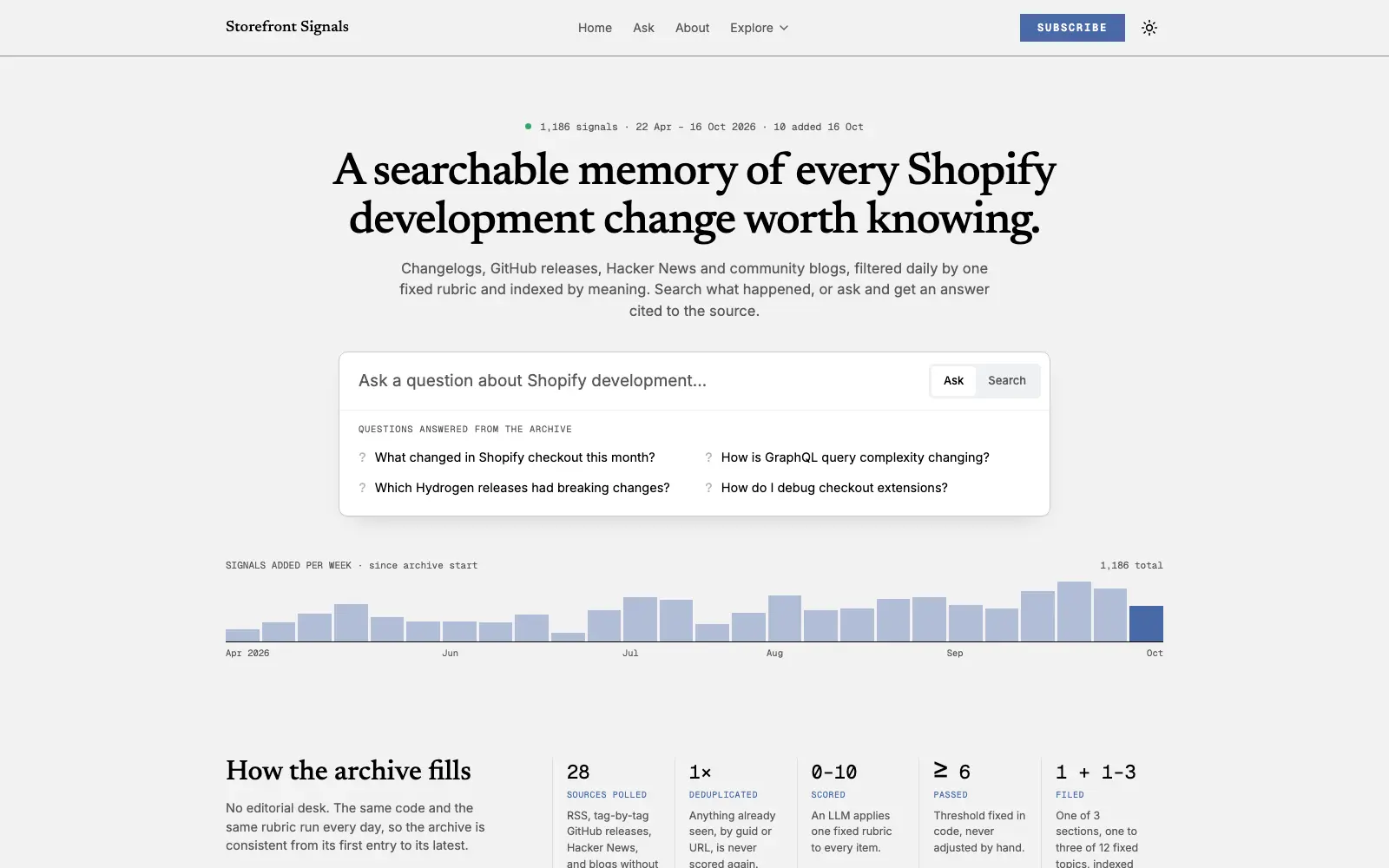
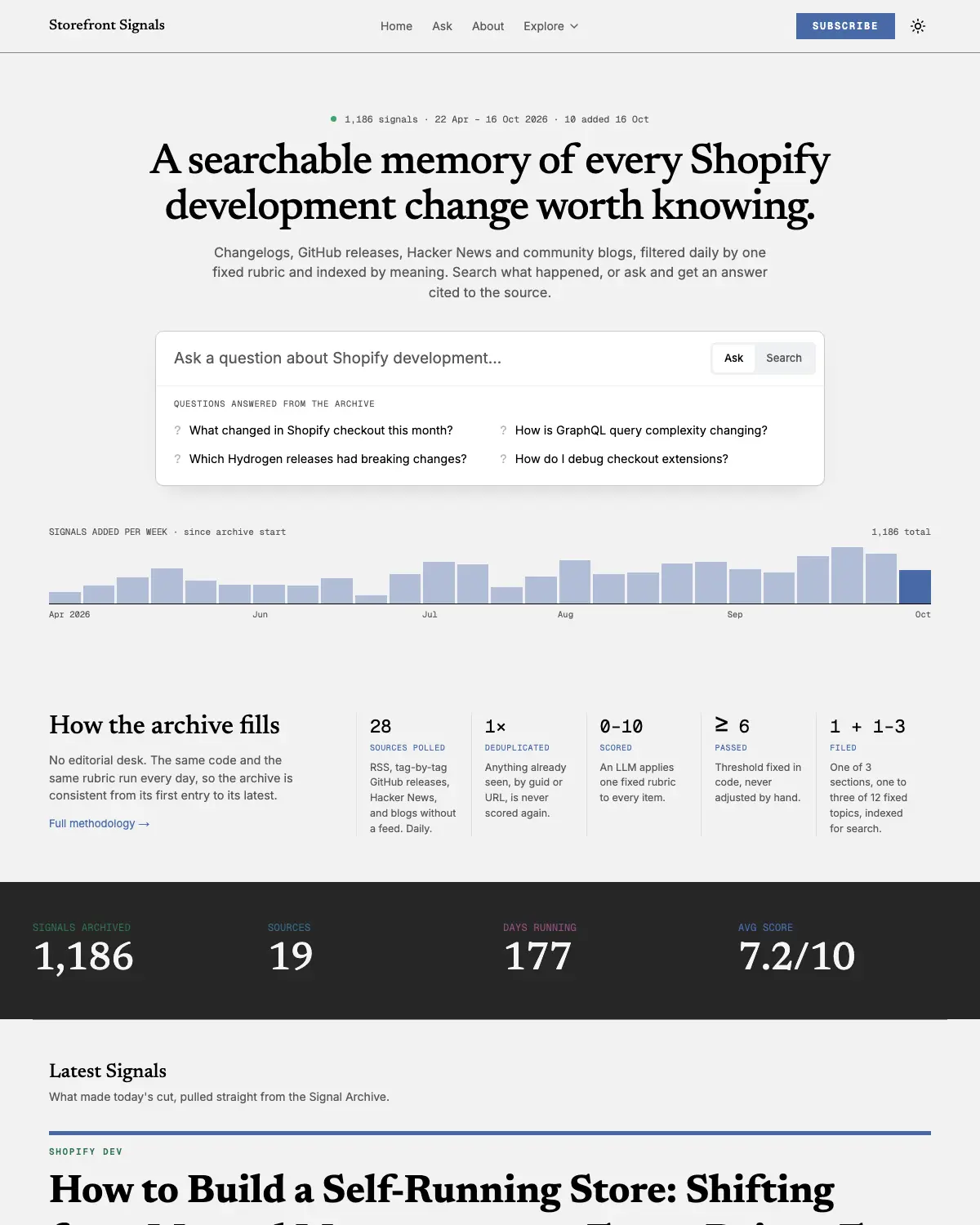
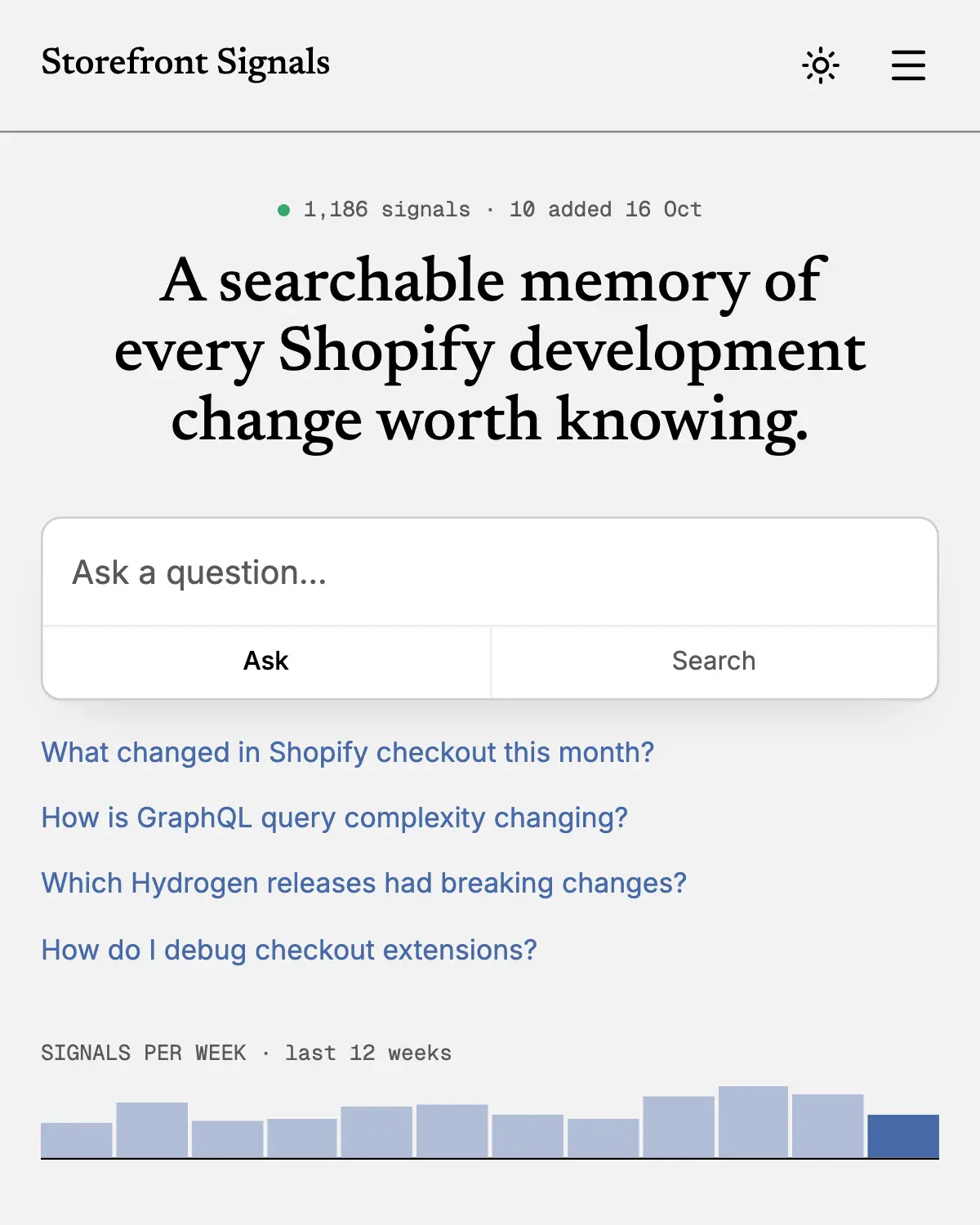
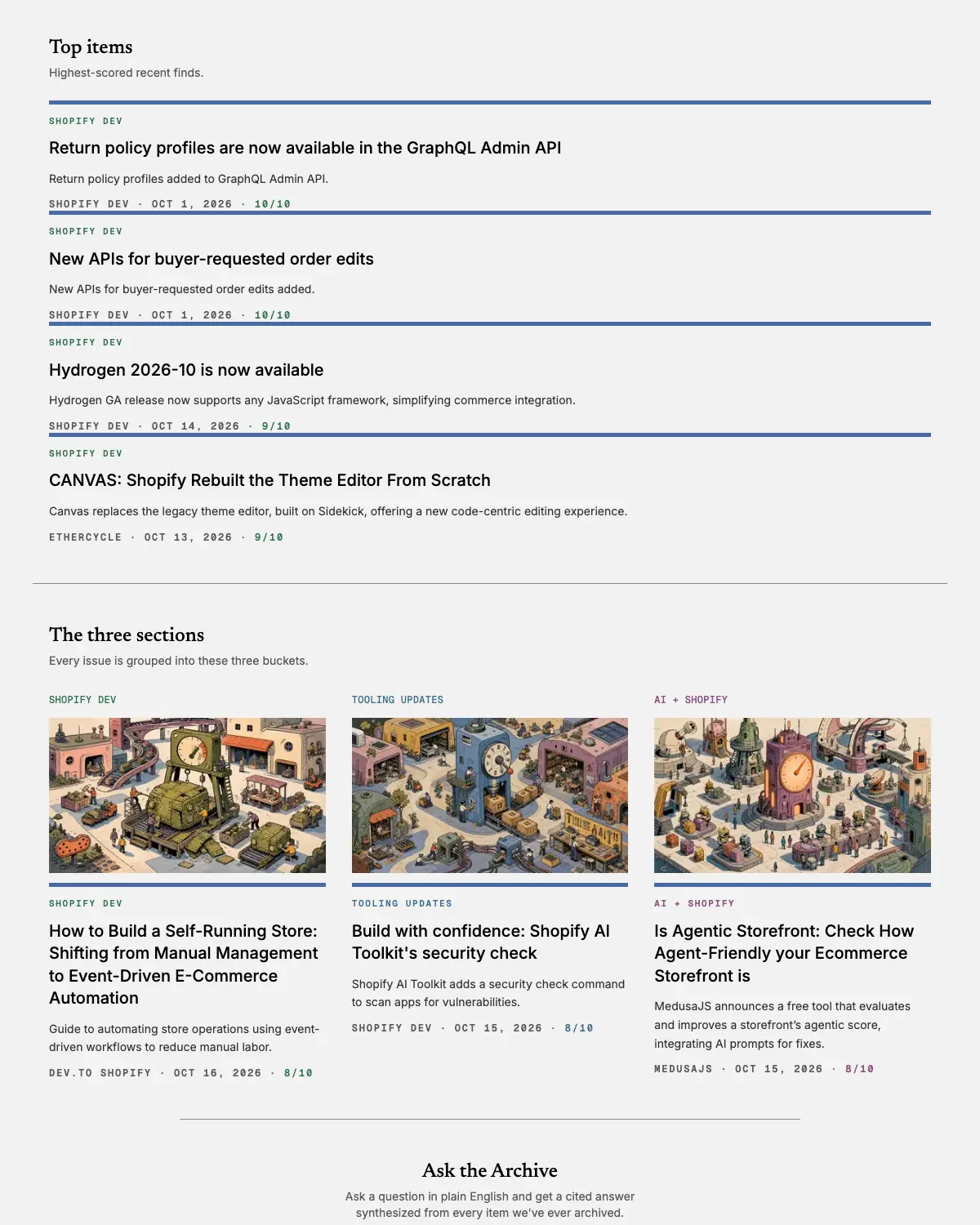
The home page: ask or search the archive, with the week-by-week pace of new signals below.
A Fixed Pipeline
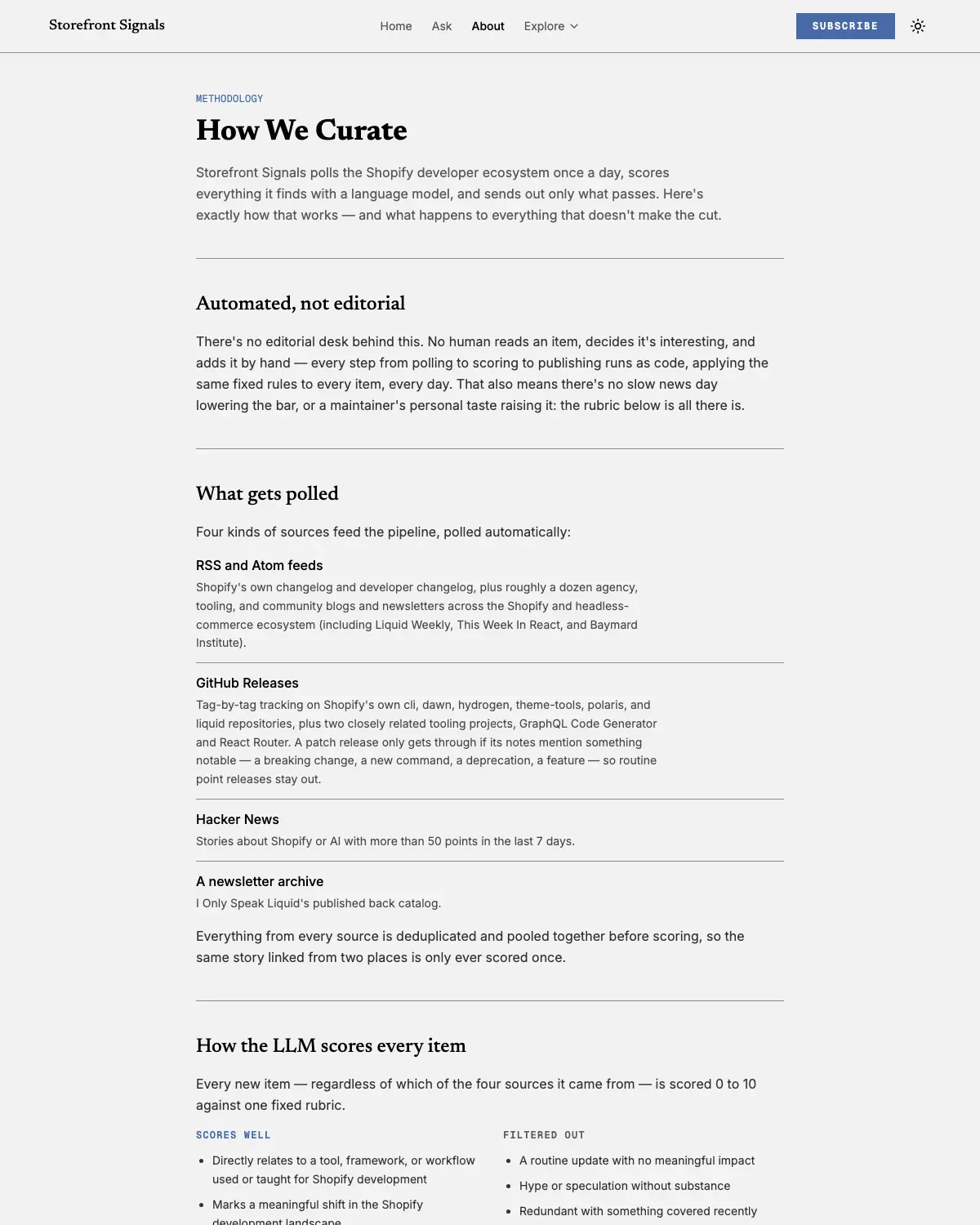
There is no editorial desk. The same code runs every day: it polls its sources (RSS and Atom feeds, GitHub releases tag by tag, Hacker News, and a newsletter archive), deduplicates by guid or URL so nothing is scored twice, and asks a language model to score each new item from 0 to 10 against a single rubric. Items scoring 6 or higher pass, and that threshold lives in code rather than being adjusted by hand. Each passing item is filed under one of three sections and tagged with one to three of twelve fixed topics, never labels the model invents on the spot.
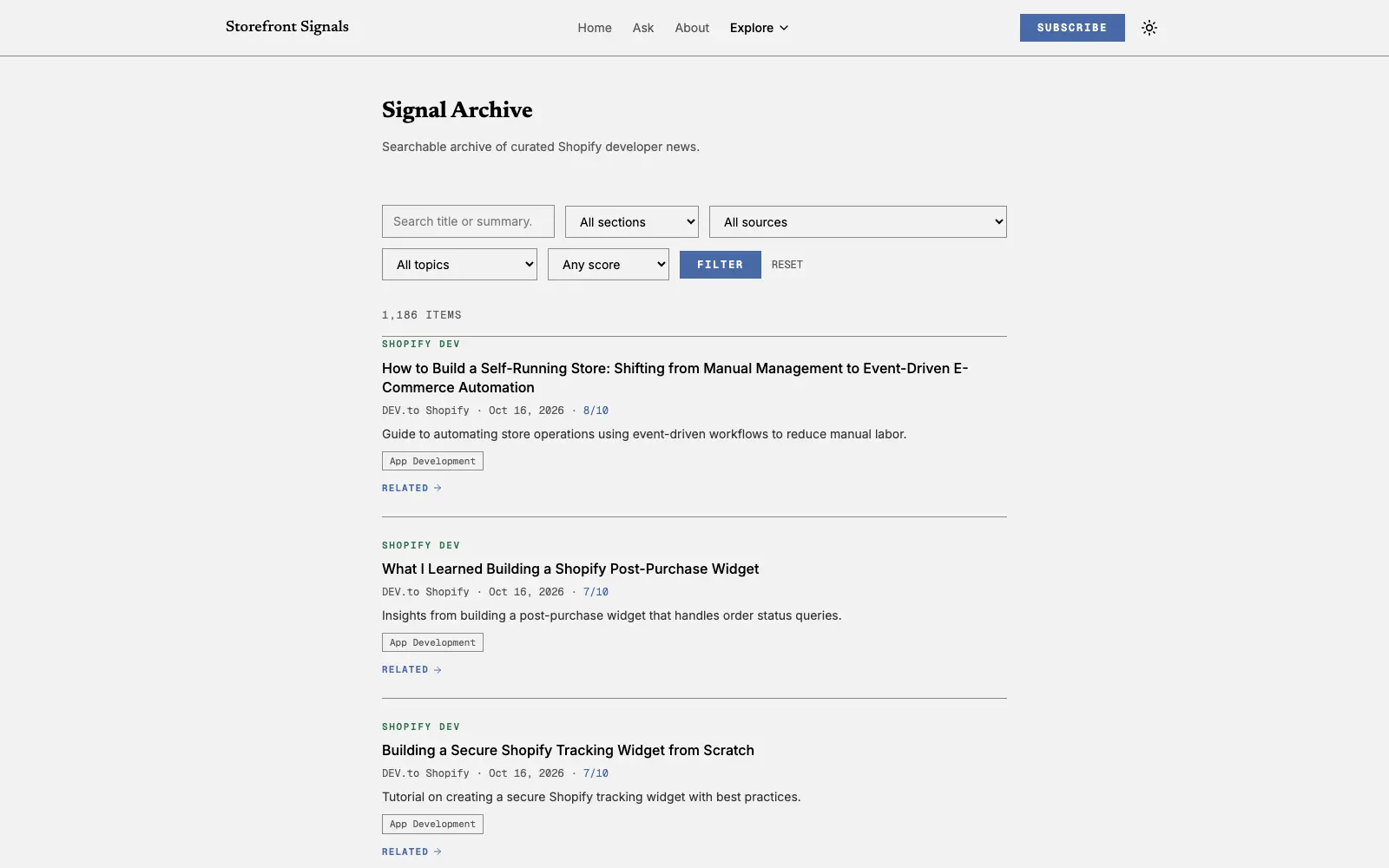
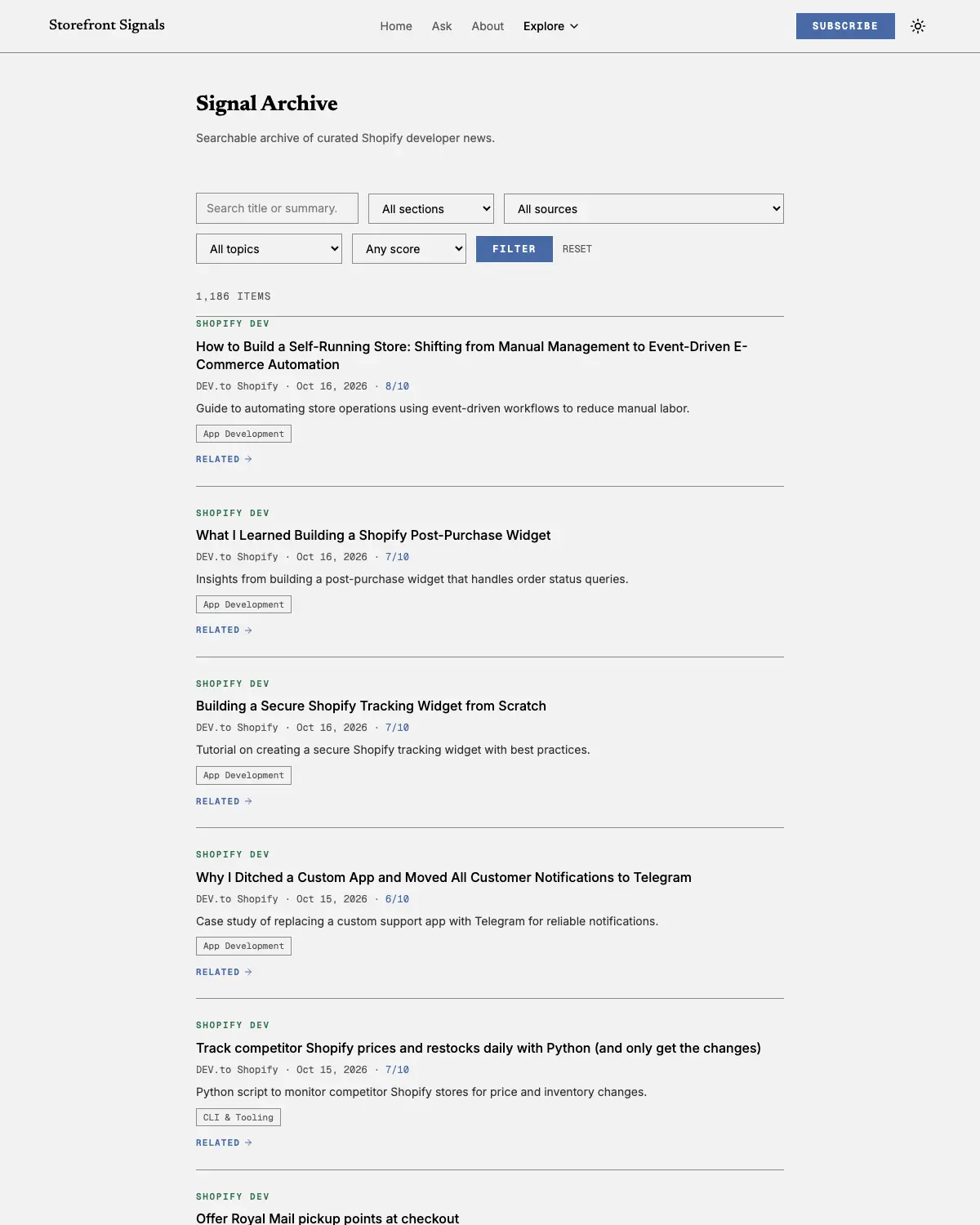
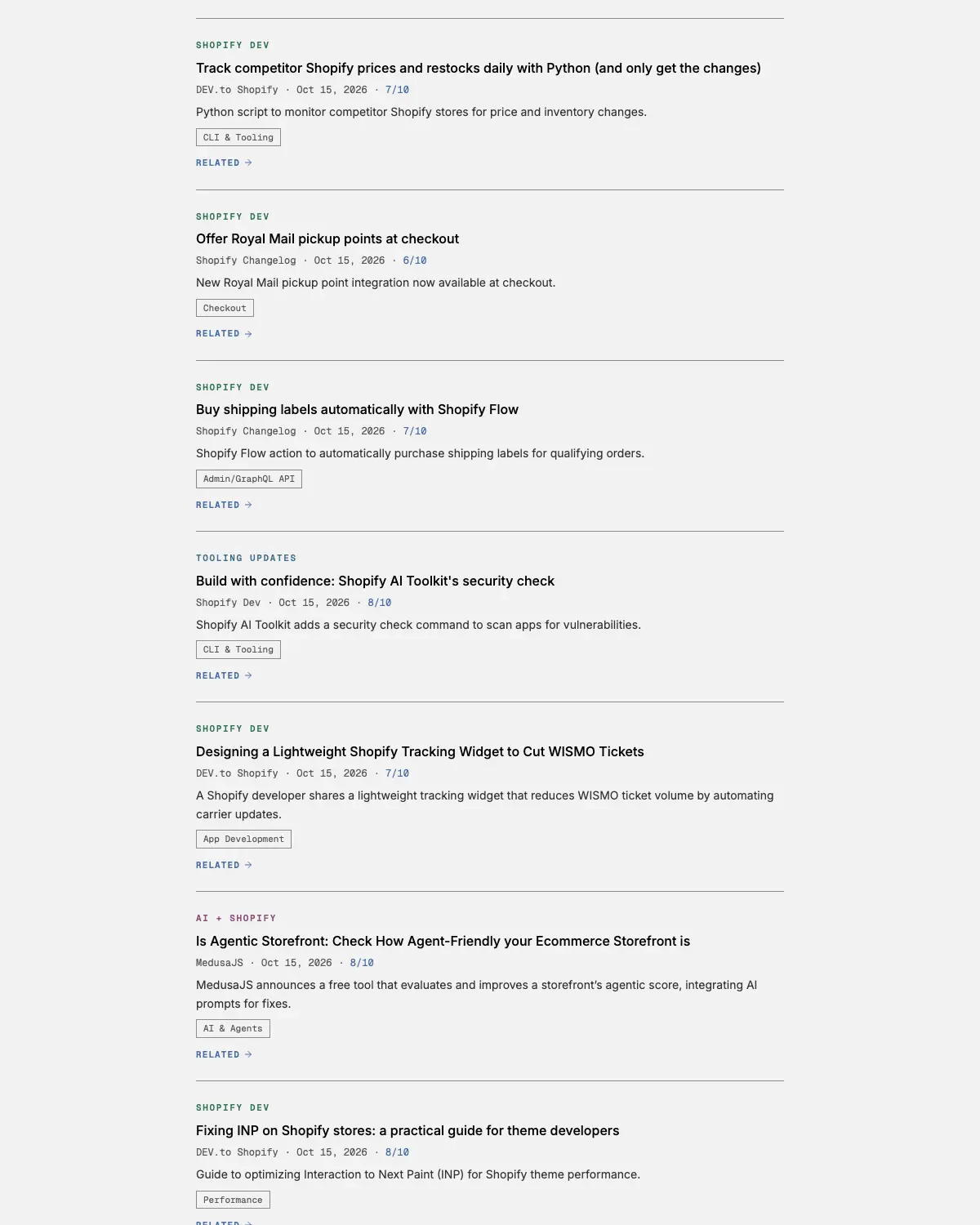
The archive, filterable by section, source, topic, and score.
Search by Meaning, Ask in Plain English
The archive is indexed by meaning as well as by keyword, so semantic search finds related items even when the wording differs. Ask goes a step further: type a question such as what changed in Shopify checkout this month, and get an answer synthesized from the archive and cited to its sources. A daily email digest, double opt-in, delivers whatever passed that day.
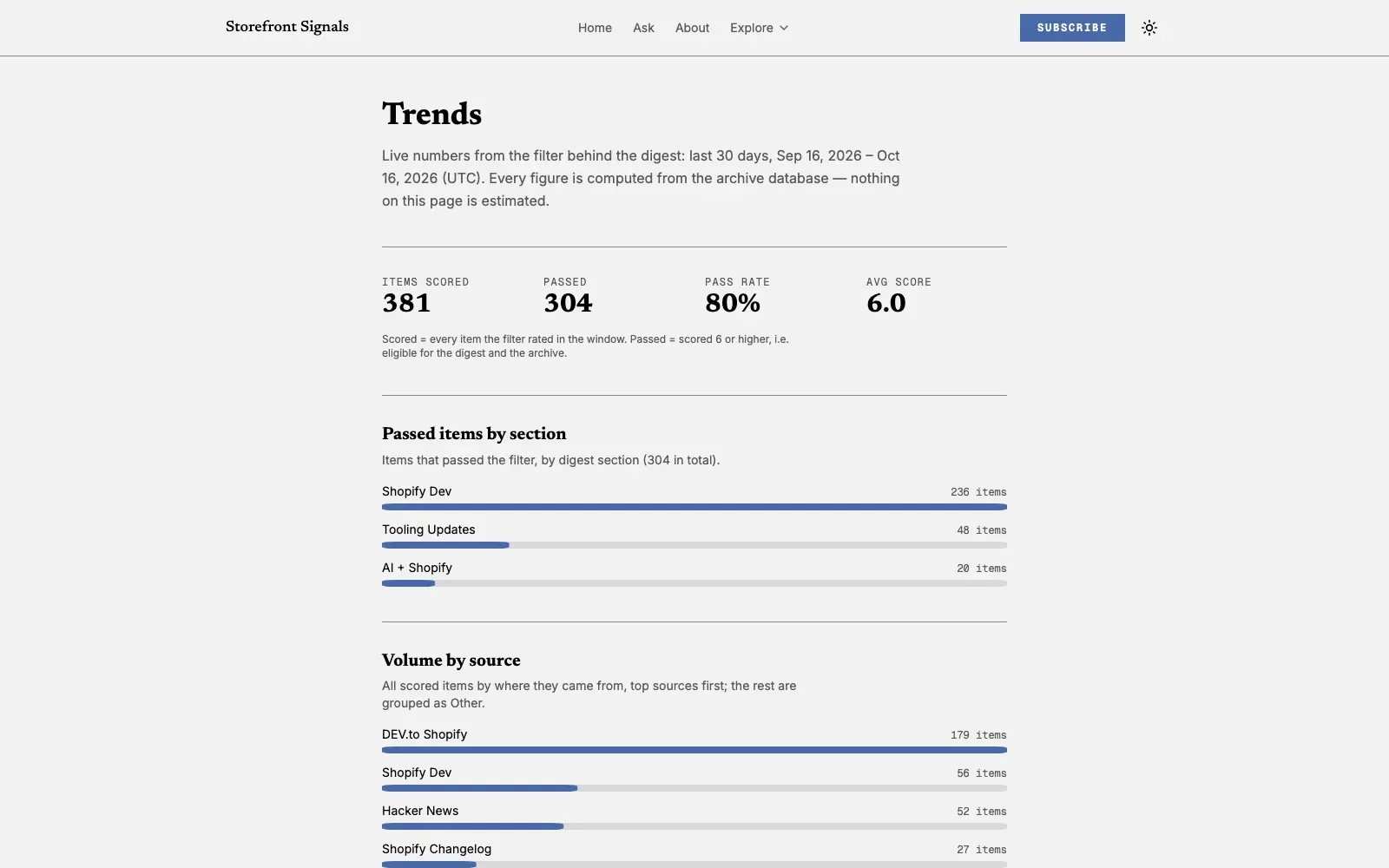
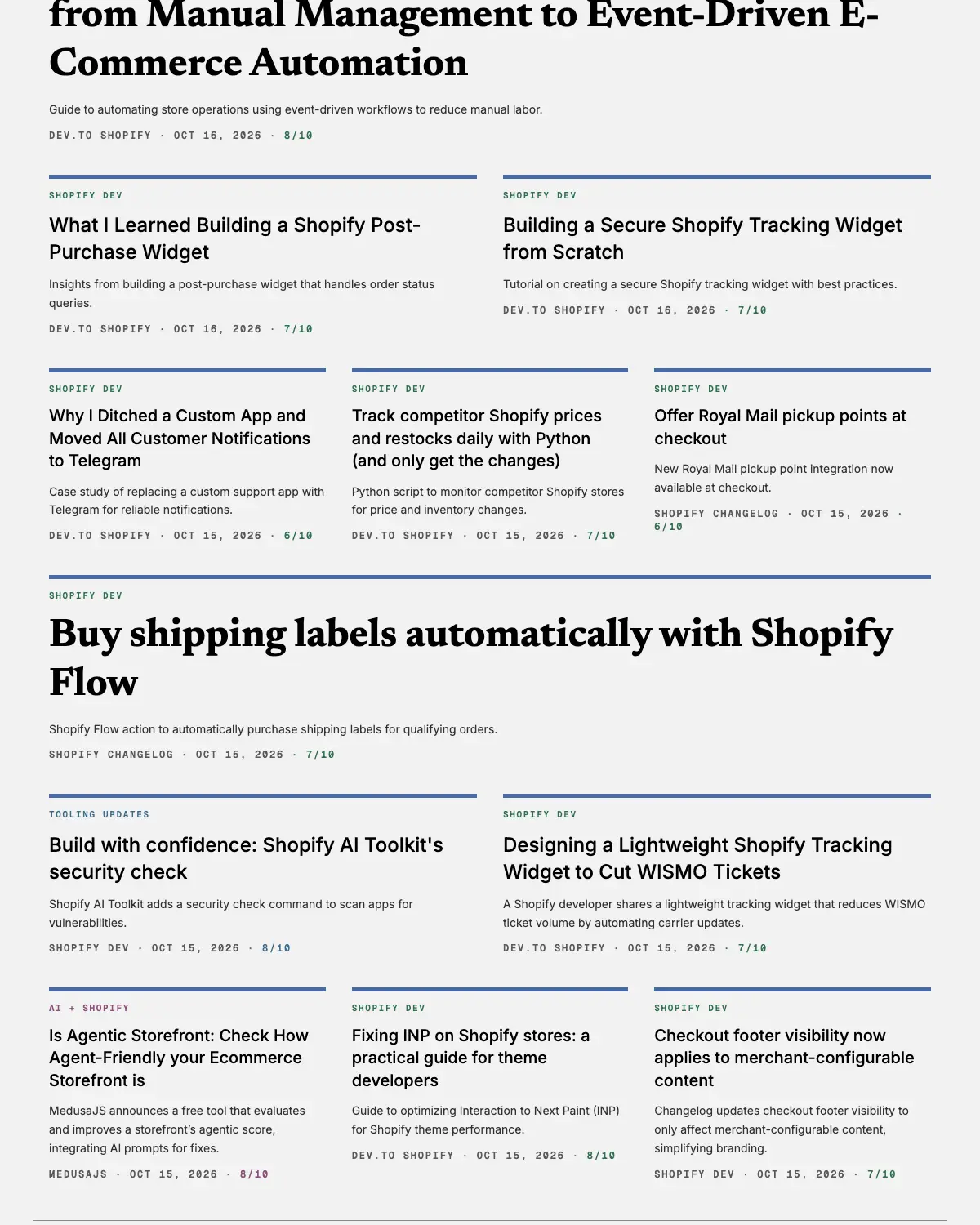
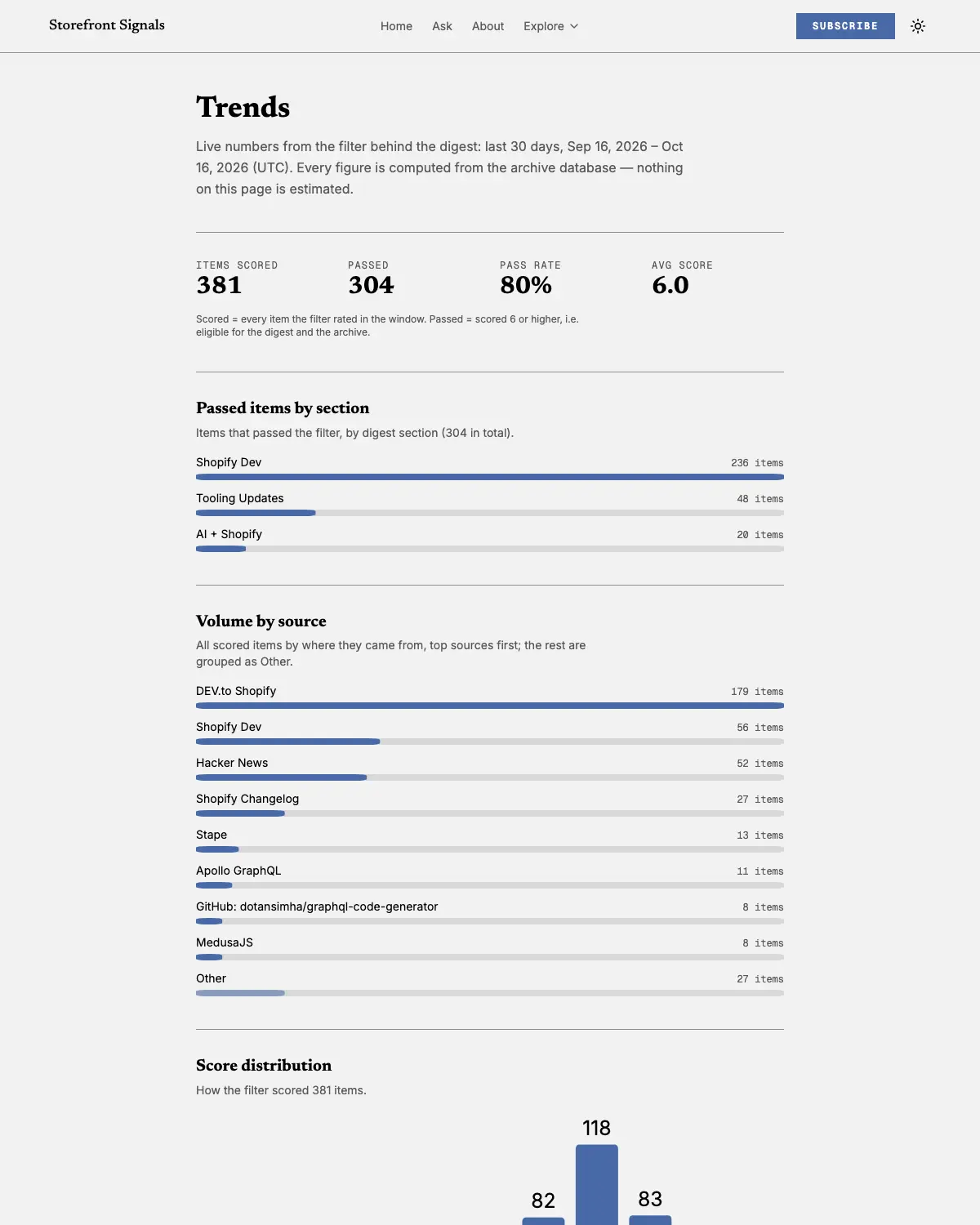
Trends: what the archive is filling up with, by section, source, and score.
Filter Aggressively, Keep Everything
Every item the pipeline scores is recorded, whether it passes or not, so the filter can be audited and the rubric improved without losing history. Only passing items are published. The result is an archive that stays consistent from its first entry to its latest: the same rules applied every day, on slow days and busy ones.